
01
Soft tissue impaction
There is not enough room for gum tissue to retract around the tooth, which makes adequate cleaning difficult and can increase irritation or infection risk.
Wisdom teeth
Wisdom teeth become impacted when there is not enough space for them to erupt into a healthy position for chewing and cleaning. Imaging and exam findings help determine whether removal is recommended.
What impaction means
Most people develop 32 permanent adult teeth, but many jaws do not have enough space for the four wisdom teeth. When inadequate space prevents eruption, these third molars are called impacted wisdom teeth.
An impacted wisdom tooth may be trapped by gum tissue, partially covered by bone, fully embedded in the jawbone, or positioned in a way that makes cleaning and removal more complex.
The concern is not only whether the tooth can be seen. It is whether it can erupt into the proper position for chewing, cleaning, and long-term health.
Consultation and x-rays
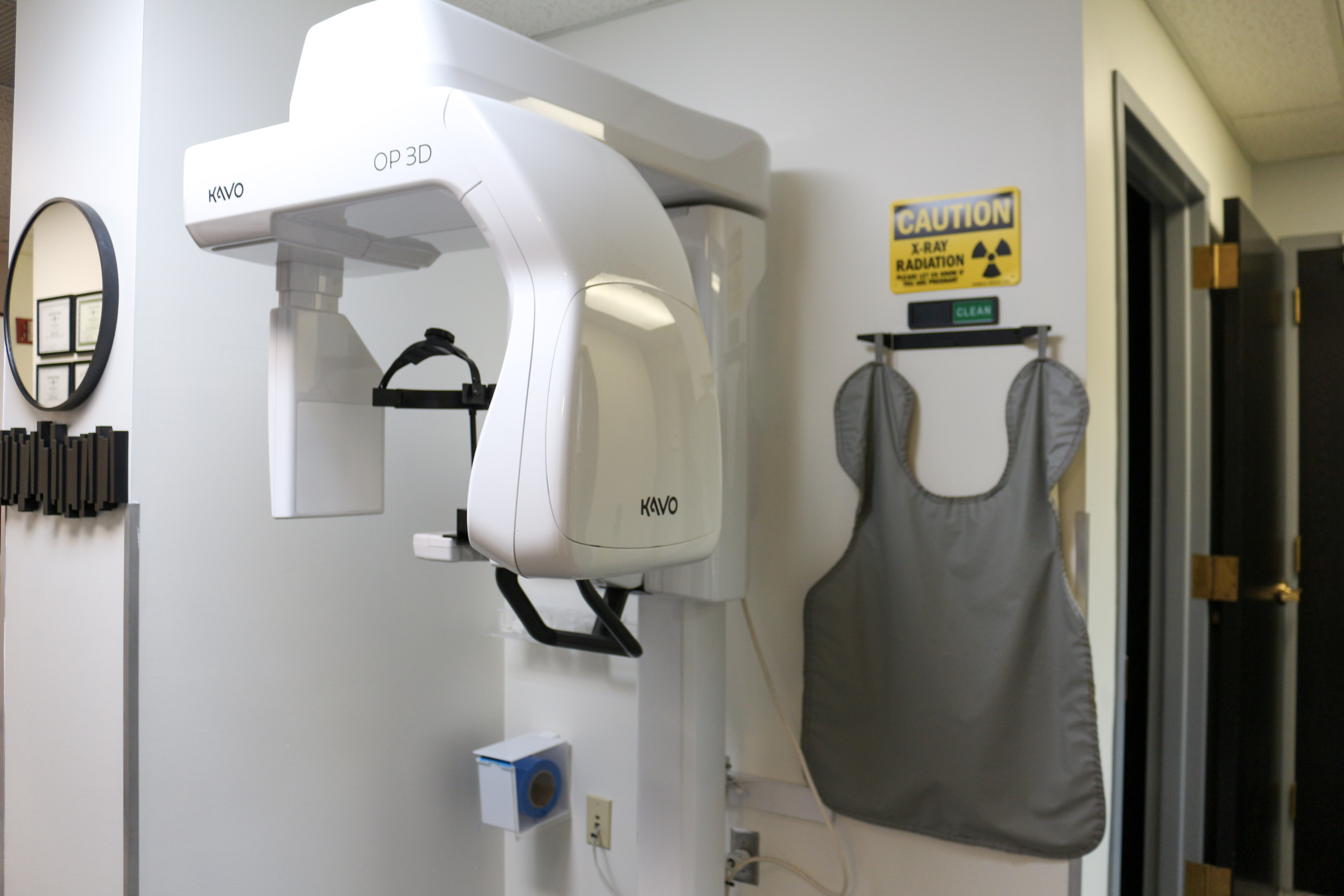
A special x-ray of the mouth and jaws helps determine whether wisdom teeth are impacted, if there is room for eruption, and how difficult removal may be.
Types of impactions
Knowing the type of impaction helps your surgeon estimate complexity, explain risks, and decide whether removal is likely to benefit you.
There is not enough room for gum tissue to retract around the tooth, which makes adequate cleaning difficult and can increase irritation or infection risk.
The wisdom tooth has enough space to partially erupt, but it cannot function properly for chewing and often creates cleaning problems.
There is no space for the tooth to erupt, so it remains embedded in the jawbone or requires more complex surgical techniques for removal.
Evaluation
During consultation, your surgeon reviews the position of the wisdom teeth and explains whether removal is recommended, how difficult it may be, and what anesthesia options make sense.
Review wisdom tooth position
Check available space for eruption
Evaluate cleaning access
Estimate removal complexity
Discuss whether removal is recommended
Function
Even when a wisdom tooth is partly visible, it may not contribute to chewing in a useful way. Instead, it can create cleaning issues and increase risk around the neighboring tooth.
Complexity
A wisdom tooth may sit at an unusual angle or be affected by the size and shape of the jawbone and nearby facial structures. These details guide the surgical plan.
Schedule a consultation
We will review your x-rays, explain the type of impaction, and help you understand the safest next step.